

-250x250.jpg "Panasonic eneloop AA Ni-MH Pre-Charged Rechargeable Batteries (4 Pack)")
















- Stock: In Stock
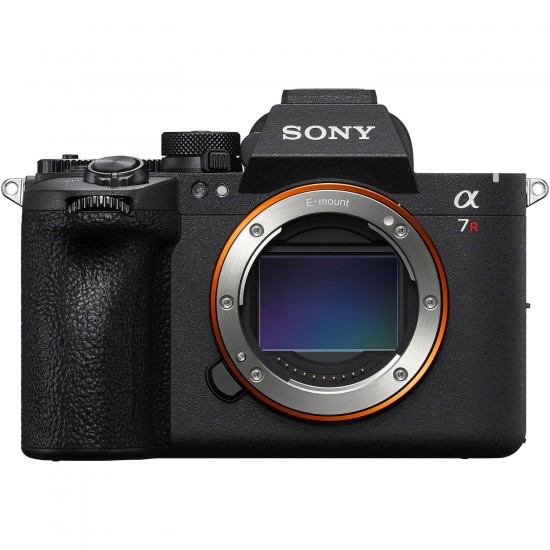
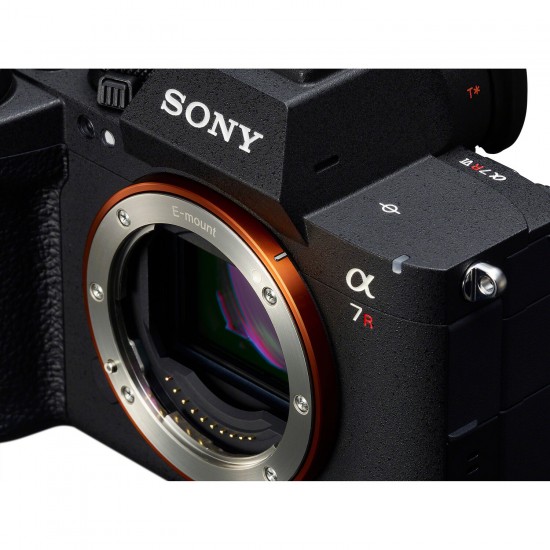
- Model: Sony a7R VI Mirrorless Camera
- SKU: 10120720037

Product Highlights
- 66.8MP FF Stacked Exmor RS BSI Sensor
- 30 fps Shooting with AF/AE & Pre-Capture
- AI-Based Real-time Recognition AF+
- 8K 30/4K 120 10-Bit Video + Dual Gain
- 16-Stop Dynamic Range + AI-Based AWB
- 8.5-Stop IBIS + Composite Raw Shooting
- 9.44m-Dot EVF with 120 fps Refresh Rate
- 3.2" 2.1m-Dot 4-Axis Touchscreen LCD
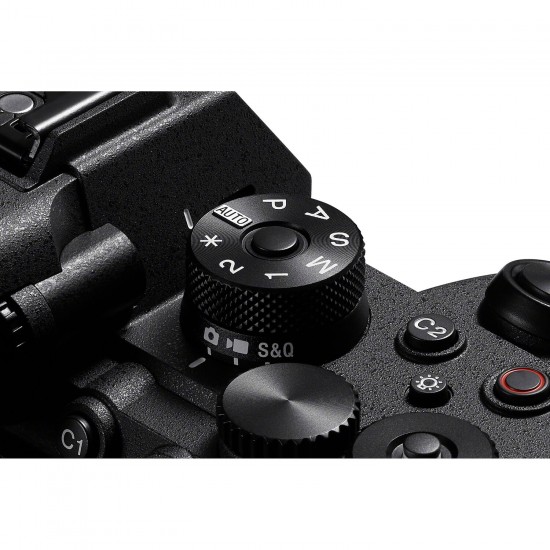
- Illuminated Buttons + New Battery & Grip
- Dual CFexpress Type A/SD Card Slots
Overview of the Sony a7R VI Mirrorless Camera
The Sony a7R VI mirrorless camera from Sony pushes the boundaries of what’s possible in an R-series camera, combining the highest-resolution sensor ever seen in an a7 body with 30 fps continuous shooting, advanced 8K video recording, AI-powered autofocus, and improved handling and battery performance. Built as a true hybrid system, the a7R VI is designed for creators working across photography and video from portraits and landscapes to wildlife, sports, commercial, editorial, and event production. With its combination of ultra-high resolution, advanced AI autofocus, professional video features, improved stabilization, refined ergonomics, and powerful connectivity options, the Sony a7R VI positions itself as one of the most capable and versatile hybrid cameras Sony has ever created.
At the heart of the camera is Sony’s newly developed 66.8MP full-frame Exmor RS BSI stacked CMOS sensor the highest-resolution sensor ever featured in an a7 body and currently the highest-resolution full-frame fully stacked sensor available. The stacked sensor architecture delivers readout speeds up to 5.6x faster than previous generations, significantly improving overall responsiveness, autofocus performance, rolling shutter control, and processing efficiency. Paired with the new BIONZ XR2 image processor and a dedicated AI Processing Unit, the a7R VI delivers faster shooting performance, more intelligent autofocus and subject recognition, improved exposure and white balance accuracy, and smoother overall operation when handling demanding imaging tasks. The backside-illuminated sensor design contributes to improved image quality with cleaner shadows, better low-light performance, enhanced HDR rendering, and an impressive 16-stop dynamic range. A copper wiring layer also improves data transmission speed for high-resolution 14-bit image capture. Native ISO ranges from 100-32000 and can be expanded from ISO 50 all the way up to ISO 102400.
Sony has heavily upgraded the camera’s continuous shooting and action capabilities. The a7R VI can shoot at up to 30 fps with full AF/AE tracking while maintaining exceptional image quality and autofocus performance. The new processing system also minimizes rolling shutter and motion distortion for cleaner rendering of moving subjects.
For the first time in an a7R-series body, Sony introduces Pre-Capture and Speed Boost functions. Pre-Capture allows the camera to buffer images at up to 30 fps while the shutter button is half-pressed, enabling photographers to save moments before the shutter is fully activated. Users can customize the capture window between 0.03 and 1 second. Speed Boost allows instant switching from a standard continuous shooting speed to a higher frame rate using a custom button, ensuring photographers never miss fast-changing moments.
Image stabilization has also received major improvements. The revised 5-axis in-body image stabilization system now offers up to 8.5 stops of compensation in the center frame and up to 7 stops at the edges. The stabilization system combines a high-performance gyro sensor with optimized algorithms and improved communication between the lens and camera body for more precise shake correction. For video creators, Sony adds improved Active IS stabilization and updated digital stabilization algorithms for smoother handheld footage, especially when paired with compatible OSS lenses.
The camera also supports Pixel Shift Multi Shooting, enabling creators to generate composite images with approximately 265.8MP of detail by combining multiple exposures through sensor-shift technology. This process improves color accuracy and detail reproduction beyond what’s achievable in a single exposure. Multi-image HDR and Noise Reduction modes are also available for expanded dynamic range and reduced image noise. Exposure and color science have also been refined. An updated auto-exposure algorithm can detect facial skin areas more accurately, improving portrait exposure reliability even in difficult lighting situations such as backlighting or direct sunlight. Deep learning technology, combined with visible light and infrared sensors, contributes to more accurate color reproduction and white balance processing.
Autofocus is one of the biggest upgrades in the a7R VI. Powered by the dedicated AI Processing Unit, the new Real-time Recognition AF+ system provides more accurate subject detection and improved tracking stability across a wide range of scenarios. The camera supports recognition for seven subject categories including Humans, Animals, Birds, Animal/Bird, Insects, Cars/Trains, and Airplanes. Human recognition has been significantly improved with enhanced pose estimation, better tracking in crowded environments, improved detection of smaller or distant subjects, and more reliable tracking of partially obscured faces and bodies. Animal and Bird modes can recognize various species while accurately focusing on eyes, heads, and body positions. Insect recognition can detect either the insect’s head or the entire subject, while vehicle and aircraft recognition can detect specific shapes like the nose of an airplane or the front section of a train.
Real-time Tracking has also evolved with AI-assisted subject analysis for smoother and more reliable tracking during sports and action photography. Human pose estimation allows the camera to maintain focus on the intended subject even if another person passes in front of the frame. The Fast Hybrid AF system uses 759 phase-detection points covering 94% of the full-frame image area and 100% of the APS-C crop area. Autofocus sensitivity reaches down to -6 EV, allowing reliable focusing even in challenging low-light conditions. Continuous autofocus tracking operates at up to 60 AF/AE calculations per second while shooting at 30 fps. Sony also includes Full-time DMF, allowing instant manual focus override using the lens focus ring while autofocus remains active.
Photographers can also customize focus area sizes from XS to XL and create custom focus area shapes depending on shooting requirements. In-camera Focus Bracketing supports up to 299 frames for creating composite images with extended depth of field during post-production. Video autofocus features have also expanded significantly. Real-time Eye AF works during video recording for humans, animals, and birds. Focus Map provides a visual depth-of-field overlay similar to focus peaking, helping creators understand foreground and background focus relationships in real time. AF Assist, inherited from Sony’s FX6 Cinema Line camera, enables smooth transitions between autofocus and manual focus during recording. Focus Breathing Compensation also reduces framing shifts caused by focus changes when using compatible E-mount lenses.
On the video side, the a7R VI becomes one of Sony’s most advanced hybrid cameras to date. The camera supports 10-bit full-frame 8K 30p recording using 8.2K oversampling and 4K 120p recording using 5K oversampling with full pixel readout. When shooting in Super 35 mode, 4K 60p recording uses 6.3K oversampling for enhanced detail, while 4K 120p recording can also use 4.6K oversampling. Sony includes S-Cinetone, S-Log2, S-Log3, LUT import support, and ProRes RAW HDMI output for advanced color grading and professional workflows. Thermal performance has also improved through a sigma-shaped graphite heatsink integrated into the stabilization unit. Under controlled temperatures, the camera can record 4K 120p and 8K 30p for up to 120 minutes. Even in higher temperatures around 105°F, the camera can still record 4K for up to 60 minutes and 8K for approximately 30 minutes.
Sony also introduces a new Dual Gain function for video recording. This feature reduces noise while preserving shadow detail for smoother tonal transitions and wider perceived dynamic range. Dual Gain mode operates at up to 4K 30p and is particularly suited for landscapes, interiors, and static scenes. Audio capabilities have also been upgraded. Using the optional XLR-A4 adapter, the camera supports 4-channel 32-bit float audio recording at 96 kHz. Separate WAV recording is also supported internally. An integrated noise reference microphone improves background noise reduction for both onboard and external microphones. The Multi Interface Shoe supports digital audio transmission and 4-channel 24-bit audio recording.
The body design has also evolved significantly. The camera features a revised 9.44m-dot QXGA OLED Tru-Finder EVF with 0.9x magnification, improved brightness, 10-bit display output, DCI-P3-equivalent color coverage, and smoother 120 fps playback. Sony’s 4-axis multi-angle LCD combines the flexibility of a vari-angle screen with the convenience of a tilting display. The 3.2-inch touchscreen also supports DCI-P3 color monitoring for improved color accuracy.
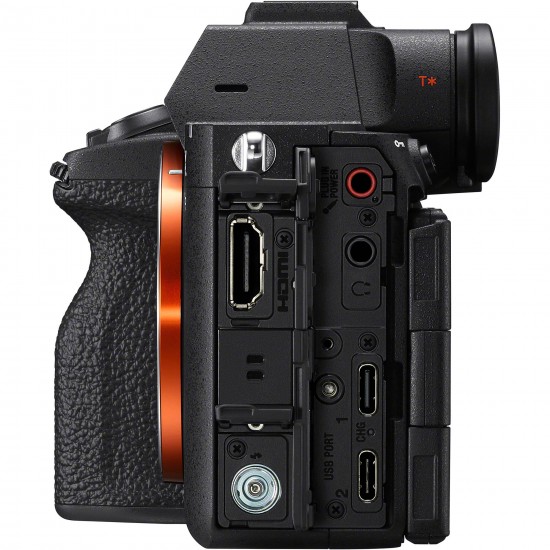
The magnesium alloy body has been reinforced for better durability and improved support when using heavy lenses. Grip rigidity has also been improved for more comfortable handheld operation. Enhanced weather sealing around the battery door, ports, and chassis joints improves resistance against dust and moisture. Connectivity includes a full-size HDMI Type-A port, dual USB-C ports, PC sync terminal, headphone and microphone ports, and expanded Multi Interface Shoe functionality. USB-C Gen 2 supports transfer speeds up to 10 Gbps, while the second USB-C port handles power delivery and charging. The camera also supports wired LAN transfer speeds up to 1000BASE-T through an optional USB-Ethernet adapter. Wireless features include built-in Wi-Fi 6 with 2x2 MIMO support across 5 GHz and 6 GHz bands, Bluetooth connectivity, wireless tethering, remote operation, and wired or wireless 4K livestreaming support with UVC/UAC compliance.
Sony also introduces updated accessories built around the new NP-SA100 battery platform. The BC-SAD1 dual charger can charge two batteries approximately 26% faster than previous-generation chargers. The VG-C6 vertical grip supports two NP-SA100 batteries for extended operation, while the DC-C2 DC Coupler provides continuous USB-powered operation. For professional audio users, the optional XLR-A4 adapter integrates directly through the Multi Interface Shoe and supports 4-channel 32-bit float audio recording at 96 kHz.
In the Package
- Sony a7R VI Mirrorless Camera
- Sony NP-SA100 Battery (2670 mAh)
- Sony BC-SAD1 Battery Charger
- Cable Clamp
- Sony ALC-B1EM Body Cap for E-Mount Cameras
- Shoulder Strap
- Sony Multi Interface Shoe Cap
- Eyepiece Cup
/Sony%20Alpha%20A7R%20III%20Camera%201-190x190w.jpg "Sony Alpha a7R III Mirrorless Full-frame Digital Camera (Body Only)")